
Let us summarize here all aspects of such a board – thus the prospective maker can produce what the community actually wants to get

For example:
Chapter N.:

1. Color - Green :)

2. STM32 chip used (specify, ie. STM32xxxxxx)

3. Size/layout of the board (ie. such it fits in a solderless breadboard)

4. Pins layout/mapping

5. Voltage regulators - Vcc and Acc - types (linear/switcher), params (LDO voltage, current, etc.), specify

6. Diodes for external/usb 5V Vin switching (way of wiring)

7. CPU crystal - freq/type/package, parallel resistor, caps

8. RTC resonator - freq/type/package, parallel resistor, caps

9. Decoupling caps/ferrite beads, fuses, protection diodes

10. Boot1/0 headers/switches

11. SWD header - pins pitch, layout

12. USB - disconnect resistor/pmos/pnp and driver pin number and wiring, usb d+ d- protection diodes,

13. USB connector type - mini, micro, number of mounting pads, mounting holes

14. LEDs - colors, packages, resistor's values, driver pins

15. Buttons - size/type, pins, resistors, way of wiring (high/low side), pins connected

16. PCB - 2layers/4layers, size of smd components

17. PCB - silk screen description

18. Others (e.g. SDcard socket/SDIO/SPI, other components, etc.)3) bluepill/maple mini like
4) doens’t matter. and i’d prefer port number labeling over arduino pin number labeling
5) is going to be too expensive to do good, just put something working on it, and we’ll put a decent one if we need it :p.
7) 24Mhz crystal, it allows you to use the internal clock for accurate I2S clock generation. package doesn’t matter for me.
8) only if it doesn’t take too much space, not a requirement for me.
10) also more of a nice to have i think? not a requirement for me.
11) would be nice
12) same as maple mini/bluepill is fine
13) whichever last the longest, and is properly attached to the pcb XD
14) reset button is needed, again similar to other boards
16) 2 layers, keep it cheap!
18) nope, keep it plain and simple!
And if i look at the bluepill prices, and that there is someone on aliexpress selling 20 F411’s for 60€… then it should be possible to sell such a board for 5€ if you can do it on the same scale as bluepills .
Bonus:
An as small as possible version of the above with an LQFP64 stm on it would also be awesome XD.
3) Blue board and maple mini. Could be a little bigger like the black board
4) port number labels like in blue board
5) AMS like used in Maple Mini is fine
6) yes, VIn needed, diodes would be nice extra if they fit nicely
11) yes
13) micro
15) one reset button
18) on the bottom solder pads for WinBond Flash (they’re inexpensive) and attached to one of the SPI of course
– with two independently blinkable Green eyes.. er I mean LEDs 
2. I can see some advantages in going for one of the low power series, perhaps STM32L486RG however since cheap is probably one of the most important considerations, the STM32F411CEU6 is maybe the best choice. I think on board 12 bit DACs open up a number of interesting options too, so whatever you choose, DACs would be on my wish list.
3. and 4. Bluepill or Maple Mini pin compatible board. These two form factors are the most popular and pretty flexible. Breadboard compatible is good.
5. Robust LDO – whatever is on the good bluepills will be sufficient.
6. Smokeless diodes.

7. CPU Crystal depends on CPU chosen
8. RTC crystal – probably just the usual 32kHz watch crystal+caps, or if cheaper and just as accurate/reliable a resonator.
9. Decoupling caps/ferrite beads, fuses, protection diodes – per the bluepill.
10. Boot1/0 headers/switches – I rarely use them, but since they take up no space, add the boot headers, and a reset switch.. and a “user button”
11. SWD header – pins pitch, layout – NOT the 20 pin JTAG header, its a complete waste of space. Just go with the bluepill arrangement.
12. USB – disconnect resistor/pmos/pnp, protection diodes – Of course…
13. USB connector type – mini, micro, number of mounting pads, mounting holes. A robust micro would be my choice, but mini is fine.
14. LEDs – color, package, resistor values – Green naturally — two of them – current limited to 9mA or so. Red/Orange or Green have the highest efficiency, which may be important for battery projects (https://en.wikipedia.org/wiki/Light-emitting_diode) Cost is also a factor, so look for the cheapest brightest – but not blue… please.. blue is so last year

15. Buttons – size/type, pins, resistors, way of wiring (high/low side) 1 x reset, 1 x user – active low.
16. PCB – 2layers/4layers, size of smd components – if not too expensive add separate analog and digital grounds, needn’t be entire layer, but just enough to keep the digital noise to a minimum on the ADC.
17. PCB – silk screen description
18. Others (e.g. SDcard socket/SDIO/SPI, other components, etc.) micro SD would be nice but it all adds cost. a 24CXX eerom or flash footprint would also be nice .. but that leads to other needs like terminating resistor that other users wouldn’t need. Keep it simple and as low cost as possible would be my advice.

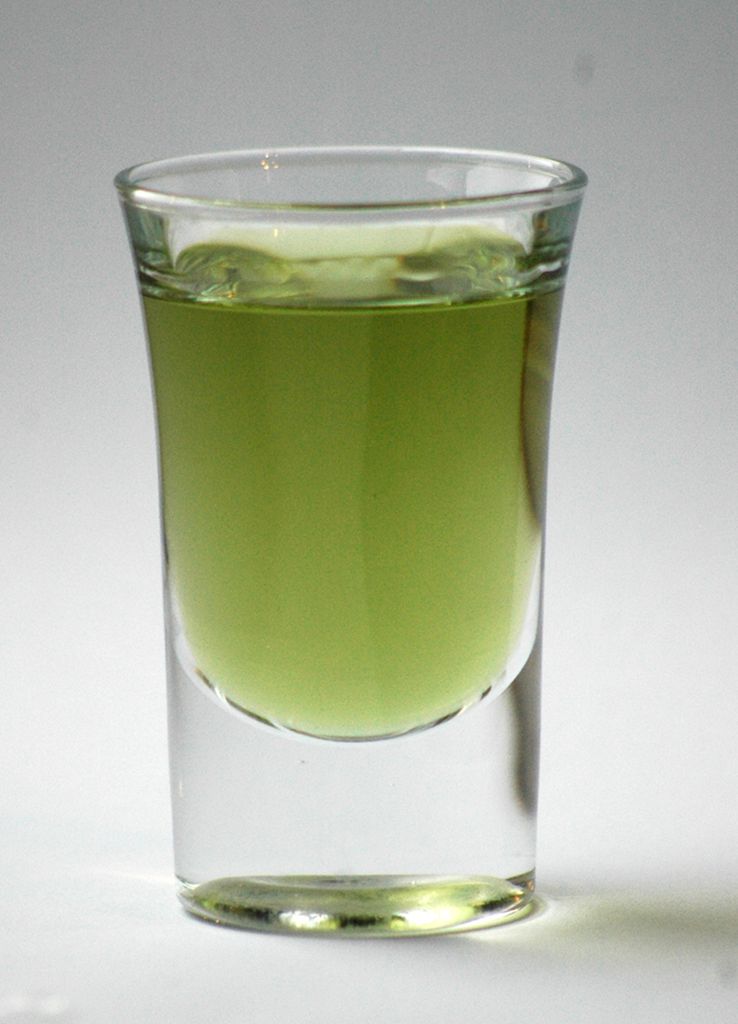
Green without a doubt

Hic… 
Or I can ask @jcw, who he is using to make his new Stm32 based JeeNode
On second thoughts, I think the price point of $2 would not interest any of the companies I deal with.
2. keep same STM32F103C8T6 for lowest cost, maybe a beefier version with STM32F411CEU6 for DAC + SDIO
3. as narrow as possible breadboard-friendly form factor like MM or BP/RP, all components mounted on top
4. BP/RP pinout is OK, but PB2 is missing, maybe replace one of the 2 adjacent corner GND pin with PB2? USB pull-up @1.5k standard, of course!
5. same LDO as RP/BP, keep it cheap AMS1117 or LM1117 style
6. Add a reverse voltage protection Schottky diode on USB, leave it up to the user for Vin to save cost when not required
7. 24 MHz crystal for I2S as stated before 8 MHz crystal as BP since it limited to 16 MHz anyway, probably smaller package than HC49SMD to be able to put all components on top side
8. RTC crystal if possible but not required, maybe not mounted on bottom side with HC49SMD cylinder type + cap footprints?
9. adding decoupling caps/ferrite beads, fuses, protection diodes would raise the cost, so no except maybe for a ferrite bead on VUSB
10. I don’t use booting from RAM, so only BOOT0 required, could be a low-profile tactile switch to be smaller
11. SWD connector same as RP/BP, maybe add a second row for UART1 (GND/5V/RXD/TXD)
12. USB – disconnect resistor/pmos/pnp and driver or USB D+/D- protection diodes would add to the cost, so no except maybe for a ferrite bead on VUSB
13. USB micro connector with soldered TH mounting pins so it doesn’t tear apart from PCB too easily
14. same LED as RP/BP
15. same button as RP/BP, maybe a second one for BOOT0 side by side, or smaller sized like NodeMCU if price is reasonable
16. PCB as cheap as possible with good enough quality (with enough glue to keep copper clad attached to core when desoldering a component several times), separate analog/digital GND as much as possible (ideally only 1 single common node)
17. PCB – silk screen same as BP/RP
18. stuff as many as possible SMD component footprints on the bottom side: SPI Flash/EEPROM/RAM, SDCard, USB disconnect and protection diodes, MCP73812 LiPo charger with Olimex-style switch over circuit based on IRLML6402 PMOS
Keep price < $2, worldwide shipping included!
Open Hardware if possible!
http://www.analoglamb.com/product/maple-tree-ret6-mini/
I would agree with all most of the comments above about keeping it cheap and simple, but I would rather have an F103RET or RGT, to make it code compatible with the blue/red pills.
At $10, there are many more powerful boards available on the market.
What makes the Pill so atractive is the unbeatable power for the bucks ratio. Of course, you can get cheaper 8051 or AVR-based boards @ $1 or below, but they are not as powerful.
Even if the STM32F103RET6 is nice, it costs almost twice the price of the STM32F103C8T6 workhorse on Digi-Key… What makes the Pill so atractive is the availability of this chip (or clones thereof…) for peanuts, then exposing almost all of its capabilities in a small affordable board.
I think that to keep the Pill atraction, we should keep this price < $2 and try to correct the small cons on the existing Pill that that do not add to the overall cost, then find a way to produce it from China at this same price.
EDIT: The STM32F103C8T6 is the cheapest STM32 you can find on Taobao, starting @ ¥6.40 ($0.92), and the cheapest Blue Pill is @ ¥9.50 ($1.37). The cheapest STM32F103RET6 is @ ¥9.00 ($1.30). Should we go down the GD32F103C8T6 way (¥4.50 $0.65)?
And keep it simple & cheaper than the actual ~10EUR F4 boards.
And keep it simple & cheaper than the actual ~10EUR F4 boards.
OK, it is a bit more than 10€, but it has lot of features which the GP (Green-Pill) does not need.
EDIT
Btw, it looks like the prices increased lately for the STM32F1 and F4 boards. I ordered this one for 10.59€ a month ago, now it is 11.91€, more than 10% increase. Is this only because of $/€ exchange rate?
F4 in blue pill pinout of course!
F4 in blue pill pinout of course!
At $10, there are many more powerful boards available on the market.
At $10, there are many more powerful boards available on the market.
nope, the RET6 is a 64pin microcontroller, and the bluepill has a 48 pin microcontroller
. you can’t switch them…that’s why so far we experimented with the 303 and the 401 & 411, they have 48 pin microcontrollers that are a step up from the f103cb
I would not mind to have Teensy 3.5 or 3.6 as a reference design for F4 color pill.
The reason that the F4 development boards are around and over $10 are low volumes and extra functionality.
- a low cost STM32F103C8T6 like the current Blue Pill but with any enhancements that does not raise the cost above $2 (WW shipping included!)
- a high end STM32F303CBT6 that would bring M4 core + FPU and DSP, more RAM/Flash, 4x 12-bit fast ADCs, 2x 12-bit DAC, more timers, PGAs, etc. in a compatible LQFP48 package @ $5 (also WW shipping included)
Maybe an option with and without pins like the Teensy for people with absolutely zero soldering skills?

The only possibility would be to get in touch with one of the original RP/BP manufacturers and propose a list of enhancements that could either increase their sales and/or margins significantly because of differentiating features and/or lower BOM costs.
Someone living in Shenzhen in this forum ready to accept this mission? He/she would receive the highest consideration from the community!


