
Core: fpiSTM official core v1.5.0
Boards: Blue Pill STM32F103 + DS3231 clock module (i tried using the internal RTC but was constantly resetting the time. The DS3231 module has been running for weeks since it was initially set and is still within a second of the actual time.)
Optional: Nokia PCD8544 display
The binary file is just over 40K with SerialUSB enabled. It is about 8K smaller with a USB/Serial dongle connected to UART 1.
I had a quick look at readme.h
Could you not use a trimmer capacitor on the antenna to get it resonant at the correct frequency, rather than changing the number of coils?
I wrote a small program to sweep the frequency above and below 60Khz while watching a scope to note the resonant frequency. As long as you get it within a couple of kilohertz it will be close enough and there will be a nice sine wave across the antenna.
It sits in a box somewhere. As I recall it has a simple RS232 interface. It was from one of those hobby kits (like propeller or something)
The west coast reception of the signal is not the best. Especially that I live on the northwest side of a range of hills east of San Francisco. (anywhere else these would be called mountains.)
Somewhere I also have the ring charts from when I was collecting clocks. The slave clocks are from my high school (I knew I would be staring at that clock in my english class forever.) These are standard electric AR-3s They take a 24 volt pulse, I think it is one second every minute to advance the ratchet. If there is a power outage a 48V pulse (might be -48V) is sent which releases the counter weights and the hands fall to 6:00 or 6:30. They are then quickly ratcheted to the correct time. Sync pulses can also be sent at the sync hour which will reset the hands.
Somewhere I bought a FET from radio shack. The tricky part was how to release the stepped 48/24v pulses. In the master clocks this was done with cams and relays. I sold the master years ago when I moved. Still have the slave clocks. I rarely run them as they make a loud click every minute when the ratchet pawl is engaged.
I too live a bit too far so some of them works perfectly, some others need to be in the north part of my house.

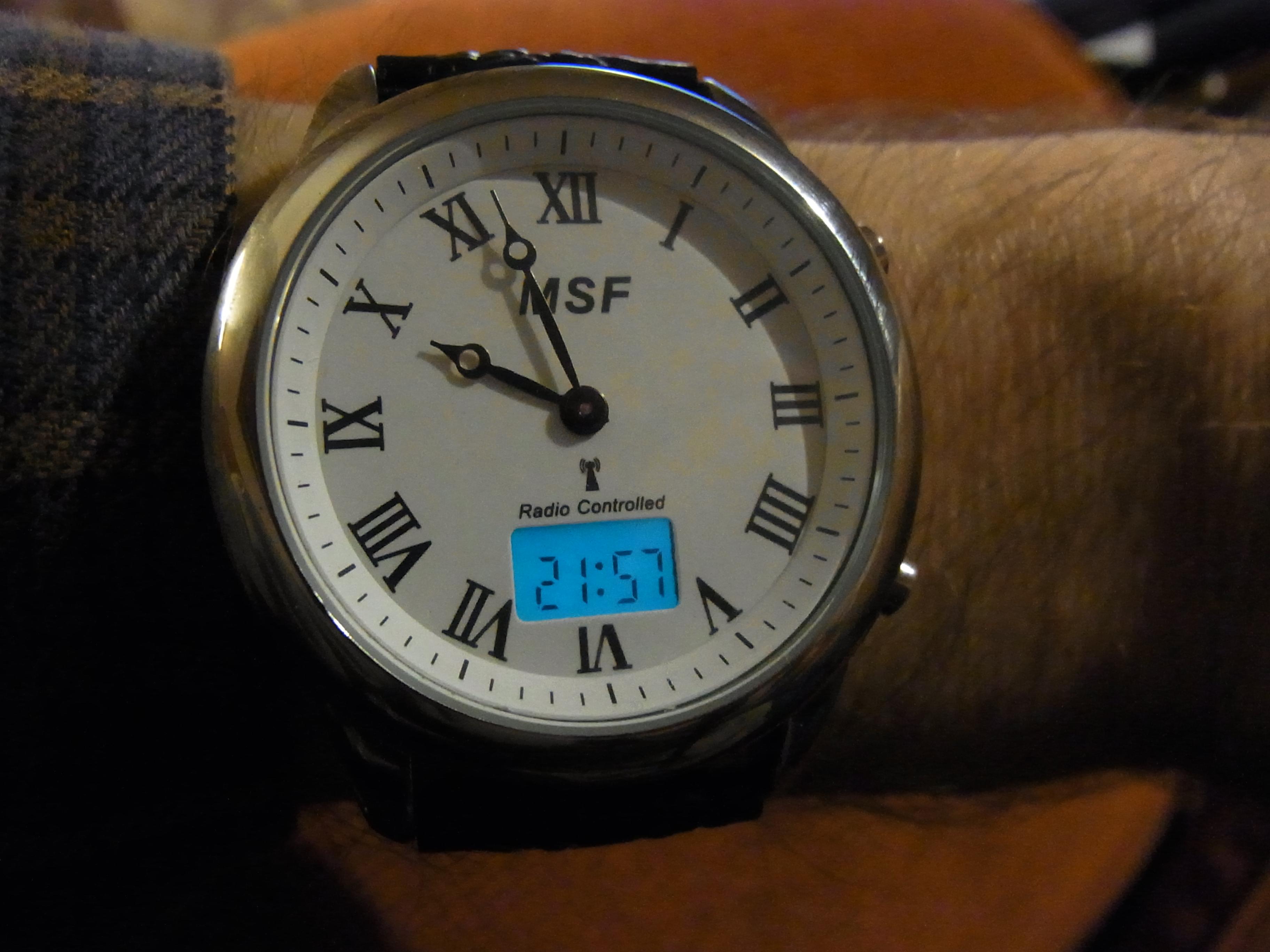
One other project I had considered was converting a really cheap AM radio from fleabay to pick up the MSF signal on 60kHz, and then use the audio output from that to feed a micro-controller.
as it turns out science and electronics advances has come so far today that it goes from this atomic clock
https://www.nist.gov/news-events/news/2 … -stability
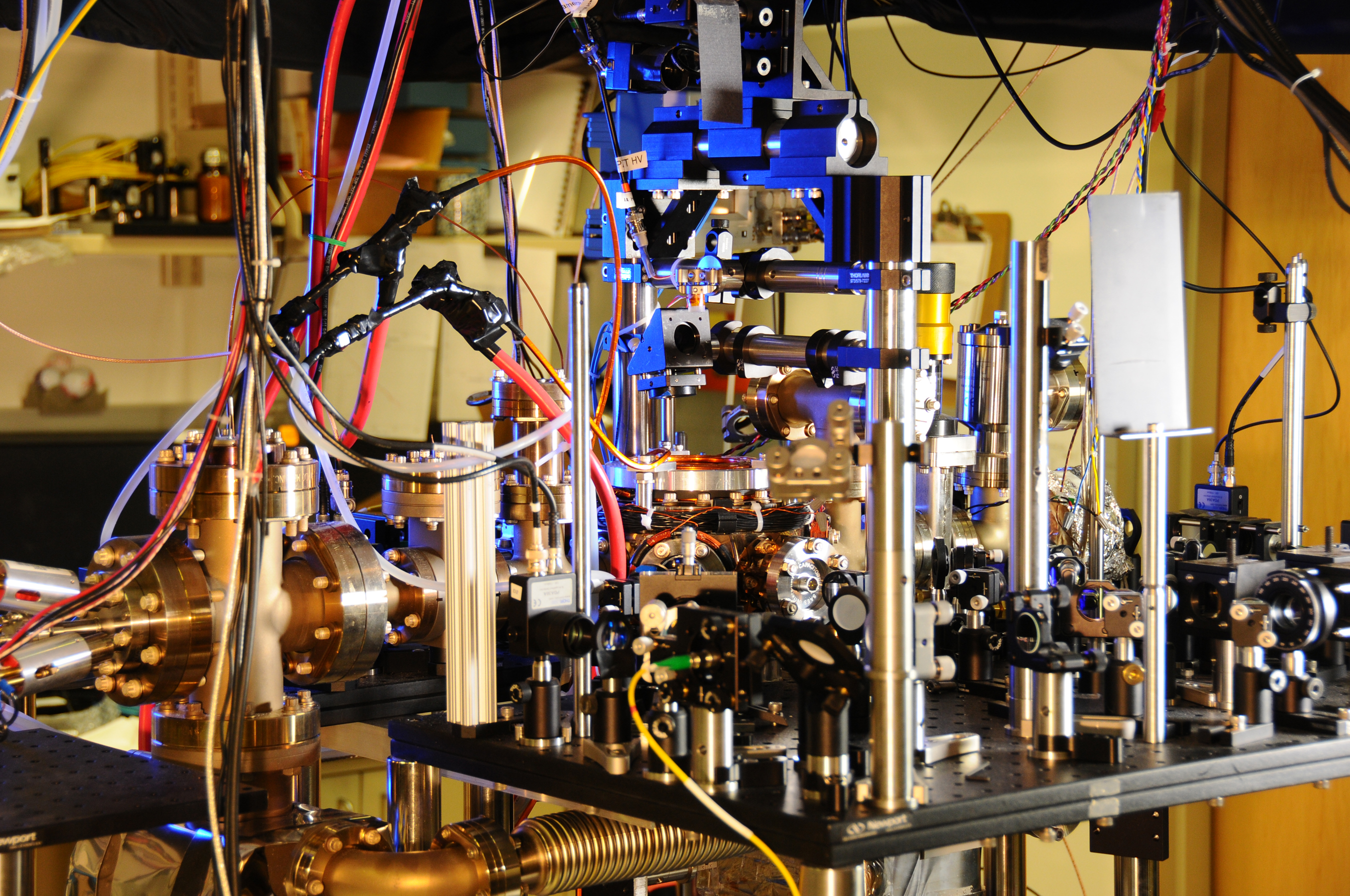
to this atomic clock
https://ieee-uffc.org/download/principl … ic-clocks/
https://www.microsemi.com/document-port … user-guide
https://www.digikey.com/catalog/en/part … -kit/81778
https://www.microsemi.com/product-direc … clock-csac
atomic clocks you can buy
would anyone want to run your blue pill RTC to
1 in 9,192,631,770 accuracy / precision ?
https://en.wikipedia.org/wiki/Caesium_standard

https://www.digikey.com/products/en?mpa … 000&v=1522
an irony is that it actually cost less than those luxury mechanical watches
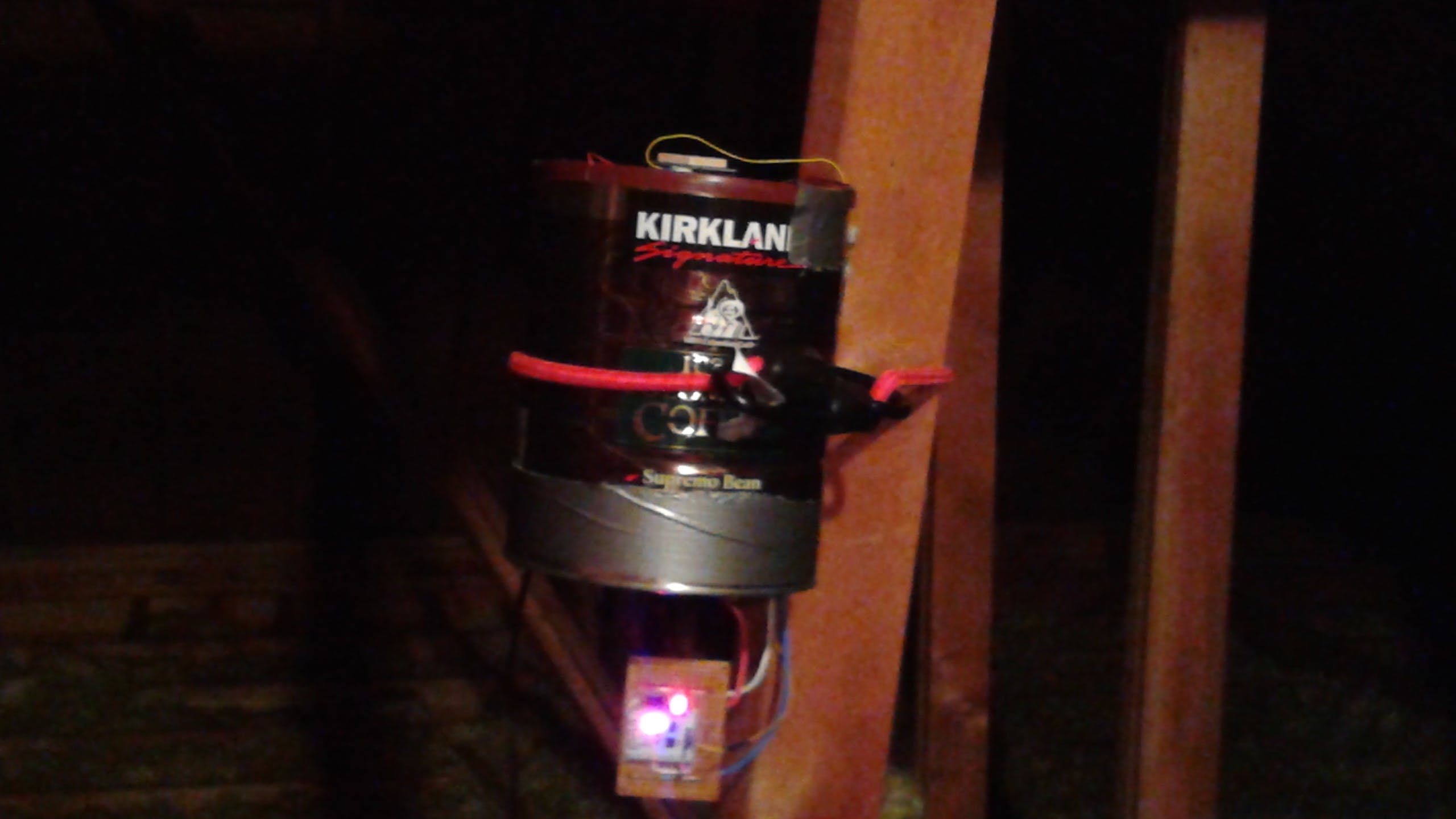

[ahull – Thu Mar 14, 2019 4:58 pm] –
One other project I had considered was converting a really cheap AM radio from fleabay to pick up the MSF signal on 60kHz, and then use the audio output from that to feed a micro-controller.
MSF, DCF77 and a lot of others radio stations (mostly european radios, I believe) can be heard here
http://websdr.ewi.utwente.nl:8901/
It is n online SDR radio that you can tune.
oh and about that chip scale atomic clock
https://en.wikipedia.org/wiki/Chip-scale_atomic_clock
i’d think there is a chance it become more popular and that prices start to come down with mass production and new competition
so in future you may be able to run an atomic clock on the bp/mm
and who knows if your next high end iphone may just offer that
https://www.edn.com/electronics-news/41 … at-mobiles
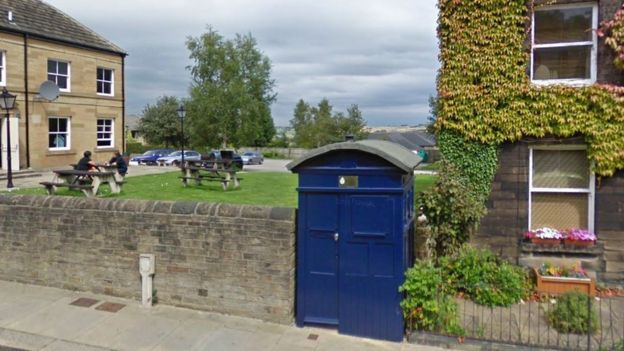
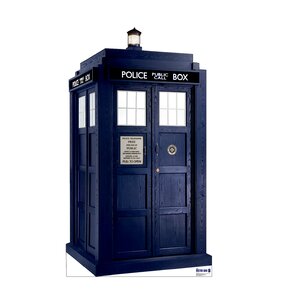
Satellite dish and police box
This clock was a bit obsolete at the time as precise timekeeping was being done with Hydrogen mazer. Cell towers also have highly accurate clocks, and precise locations, which are checked against the GPS satellites. I think it you can triangulate three towers you can find your exact location without seeing the birds. Getting the time from one of the birds needs relativistic corrections. Turns out that nothing is absolute and gravity does not exist as it is a dimensional illusion, like the other directions. It does not help that the past is infinitely slow, and the future infinitely fast. Finite infinities are so fun to play with. You can however find your land location precisely with a pendulum to measure the local gravitational constant, which will tell you the local time.
Ironically Nostradamus did his scrying with a pendulum on a tripod over a bowl of water acting as a mirror. I think Gravity is what separates the theories between Hawking and Kip Thorn. Personally I like the illusion of free will. It is weird to think that what I will write in the later part of this post already exist before I write it. Not that the paragraphs are written in order. ( tend to revise on the re-read before hitting send.)
The trick, with precise timekeeping is keeping the crystal at a common temperature. Why common quarts wristwatches are better timekeepers than the best mechanical chronometers. Even so If one was navigating with either one, it is best to keep a temperature log. Not to mention rate charts. The best watch/clock makers were metallurgists, who could measure the shape of the alloy over time and temprature and formulate the best solutions.
Ironically my mentor, said that in the 1940s and 1950s some of the best mechanical watches were made. That we know the 16th to 18th century alloys will be stable for about 500 years. That the post war alloys might be stable for a 1000 years or more. I forget how old the gears in the Prague clock (which I have seen in person.) they are 100s of years old, I think dating back to the 12th century when tower clocks were the tech like computers are now. Every city had one, and it went exponential in the 18th and 19th century when ever person had a watch or a clock. By the 20th century they were small and strong enough to strap to the wrist. (although queen Elizabeth the First had a bracelet with a watch in it.)
I always found it interesting that time is the easiest to measure but hardest to define. Temperature is easy to define but hard to measure. When I was writing the color test suite for Apple laser printers, I learned that color and temperature are the same thing. Now if someone could relate temperature to time …
Sounding a bit sexist but this idea would not work well for me (and most men) as I don’t think I have 12+ colours in my vocabulary where I find my wife (and most women) have a larger colour word range.

