
I am looking for cheap logic analyser. I searched on aliexpress but got too many results.
I want to hear out of experience people who are using one of them.
Found some clones of salae logic analyser.
Software wise I really like the ScanaStudio software best (apart from the slightly dodgy DMX decoder script) as it trumps Salae and others I have used.
https://www.seeedstudio.com/preorder-op … l?cPath=75
with
https://github.com/jawi/ols
PC front end.
You must update firmware (pic and fpga to the latest), needs some effort, however.
I then did this -> http://www.jwandrews.co.uk/2011/12/sale … ogramming/
Which means it works with Saleae Logic’s software
HOBBY COMPONENTS USB 8CH 24MHZ LOGIC ANALYSER AND TEST HOOK CLIP BUNDLE this would take more than 60$ (including shipping and price).
How about following one. which will get in 6$ only.
https://www.aliexpress.com/item/1sets-N … 6324b5ffb1
and Is it support Sigrok and Saleae software tool?
This could be an interesting option (around $67 at aliexpress).
http://hackaday.com/2015/05/26/review-d … -analyzer/
Not tested, however.
HobbyComponents is a good company. Similar price. Good service.
Yes, you can buy Chinese stuff cheaper from China. You just have to wait for a long time.
Yes, it should work with the Saleae software immediately.
If you are not in the UK, only you know what your mail service is like.
David.
Edit. 24MHz is fine for most jobs. The Logic-8 is well proven.
Yes, faster would be nice. But only when I have heard the experience from actual owners.

Of course, for watching 115k2 uart or 400kHz I2C the 24MHz sampling is ok.
How about following 100M one more which has 100M sampling rate.
https://www.aliexpress.com/item/USB-Log … c849a9bb53
If I want to debug some fast SPI, I slow the SCK down to 8MHz.
In practice, all AVR jobs and most STM32 jobs are fine with 24MHz sampling.
A Logic Analyser is only as good as the software. And “real-life” user experence.
David.
But some time controllers do weird behavior on high speed like missing of bytes.
So, that’s why i was thinking to go with bit better performance as it is available.
Is that good logic analyser?
The Logic-16 can do 9 channels at 32MHz. 6 channels at 50MHz.
Having never used the Logic-16, I just wonder how versatile the device is. For example, if I wanted to capture 24Mhz SPI, I would be limited to 6 channels. 32Mhz SPI would only allow 3 channels. SPI would need at least 4 channels.
So I would be more interested in a device that can sample 8 channels at more than 50M.
If it has compression, it can handle typical sequences even if they are a second or two.
David.
It drops to 50Mhz for 3 or 4 channels.
I think it drops to 25Mhz if you have more than 4 channels (though I can’t totally remember)
If you want to look at SPI then 4 channels should be enough, even if you need the SS / CE pin. So you will get 50Mhz which is faster than the STM32 is capable of running at.
In hindsight, I should have probably spent a bit extra and get one of those FPGA based analysers rated at
4 channels @ 400 MHZ
8 channels @ 200 MHZ
16 channels @ 100 MHZ
But they are around $75USD which is twice what I paid for the logic-16 clone
And I’ve no idea how good the software for the FPGA based analysers is.
Does anyone have experience of the FPGA type? Which model and price?
Which software?
I have been very happy with the Logic-8. Somehow the Logic-16 does not offer much more speed.
I want 8 channels. I doubt if 16 channels are often used and lower sample rate would be ok..
David.
Important part of an FPGA based LA is the verilog/vhdl FPGA frontend (“FPGA bitstream”) and the PC backend (“client sw”). They are opensourced usually. Double check whether the community supports you with updates frequently.
PS: this seems to me the most important point. For example the OLS LA is considered “mature”, it simply works, no update at FPGA side for 5y+, the PC backend gets aprox 1 small update per year.
The new DSLogic LA has been reviewed as ie. “the hw is unbeatable”, but the PC backend “needs improvements”.
The OLS samples into its internal FPGA memory only, but uses RLE compression, so even with its 24kB internal RAM you may capture longer sequences.
The DSlogic’s LA is a modern variant of the OLS with an external DRAM (and a larger FPGA), and maybe it possess an USB streaming capability (to store the data on the PC online).
Basically the fastest sampling rates get into the internal FPGA RAM, medium sampling rates could be stored into the external DRAM, and the slowest could be saved on the PC continuously (ie serial UART or I2C captures).
OLS uses the older Spartan3 FPGA with DDR sampling (8channels, 200Msps max), the DSLogic uses Spartan6 probably DDR sampling too (4 channels, max 400Msps). At highest sampling rates both save the data into internal FPGA RAM.
“200Msps” means you can observe signals with H or L ~10ns long with a good resolution. A “good resolution” means there will be always 5ns uncertainty at that sampling rate of course (because 1/200M = 5ns) – in practice it means a 50Mhz 50/50 waveform will have the L or H 10ns +/- 5ns on the screen. You can see even a single 5ns pulse or 100MHz pulse train if the sampling hits the pulses exactly. That is for OLS.
With DSLogic the stuff works theoretically twice better, but I’ve never seen any practical review on that, however.
OLS has got a simple fixed level HCMOS buffer which is 5V tolerant at its input. No special protection or matching circuitry at the input. No special probes, just plain flying wires.
The DSLogic’s LA claims they can set the input logic threshold with a DAC? (double check for the latest version), and they wired some protection and impedance matching at the LA inputs. That may decrease the bandwidth, however. Also the probes seem to be shielded.
For example the resolution of the OLS is up to 5ns. And it works. Mind the measurements at such speeds needs a good understanding of what you actually do (wire lengths, impedance matching, ..).
The LA’s with higher sampling rates are useful for people who mess with CPLD/FPGAs, memories, custom logic, etc. and who are chasing edges, glitches, collisions, ringing, etc.
PS: of course you may do similar measurements with the popular low-cost oscilloscopes today, but still the price of these low-cost FPGA based LAs is <<10% of the cheapest o’scope price with similar capabilities.
Here as an example the OLS forum
http://dangerousprototypes.com/forum/viewforum.php?f=23
and DSLogic one
http://www.dreamsourcelab.com/forum/index.php
and an attempt to create an open source platform for all LA’s 
https://sigrok.org/wiki/Supported_hardw … _analyzers
PS: There is a lot of LAs available (the above sigrok link indicates 50+ LAs), I do not advertise the OLS or the DSLogic as THE one, just using them as an example of “talented FPGA based LAs” for a very good price (almost nil compared to a professional LA equipment with similar params). I purchased the OLS maybe 7y back, I had a lot of fun with it, it helped me many times, and I still consider it one of my bests buy’s..
But the current thread here make my old wish coming back to my mind.
I will purchase either one of those : iCE40-HX1K iCEstick Eval Board or Open Workbench Logic Sniffer.
Here some stuff to read about :
http://hackaday.com/2016/10/26/an-open- … er-for-22/
https://blackmesalabs.wordpress.com/201 … er-for-22/
http://dangerousprototypes.com/docs/Ope … ic_Sniffer
http://www.seeedstudio.com/depot/preord … l?cPath=75
1. “Dogsbody” did (details on his HP16500/HP16550 style triggers built into the Demon core):
http://mygizmos.org/ols/fpga.html
and I highly recommend this reading: http://mygizmos.org/ols/Logic-Sniffer-FPGA-Spec.pdf
to anybody who feels himself ambitious enough to develop his own LA’s FPGA front end
2. Jawi still supports the client:
https://github.com/jawi/ols
So in order to get the latest you have to:
1. flash the latest pic software
2. upload the latest Demon FPGA core bitstream
3. use the latest jawi’s OLS client sw.
BTW, the development of the above ingredients took several years since the initial OLS introduction.
The jawi’s client does not support all the existing built-in Demon core functionality yet – ie the advanced HP16550 triggering, there are guys who tried to enhance the client sw with such a support, not sure how it ended up, though:
http://dangerousprototypes.com/forum/vi … =57&t=8548
http://dangerousprototypes.com/forum/vi … 57a9afe61f
http://dangerousprototypes.com/forum/viewforum.php?f=23
https://sigrok.org/blog/fx2grok-tiny-11 … use-sigrok
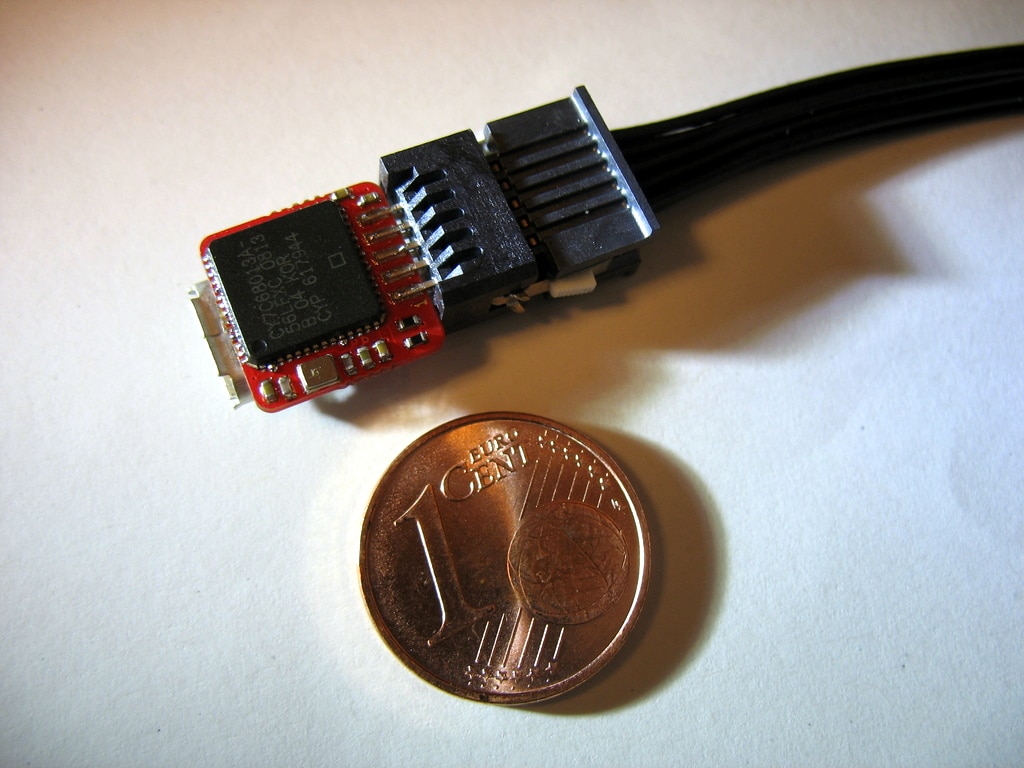
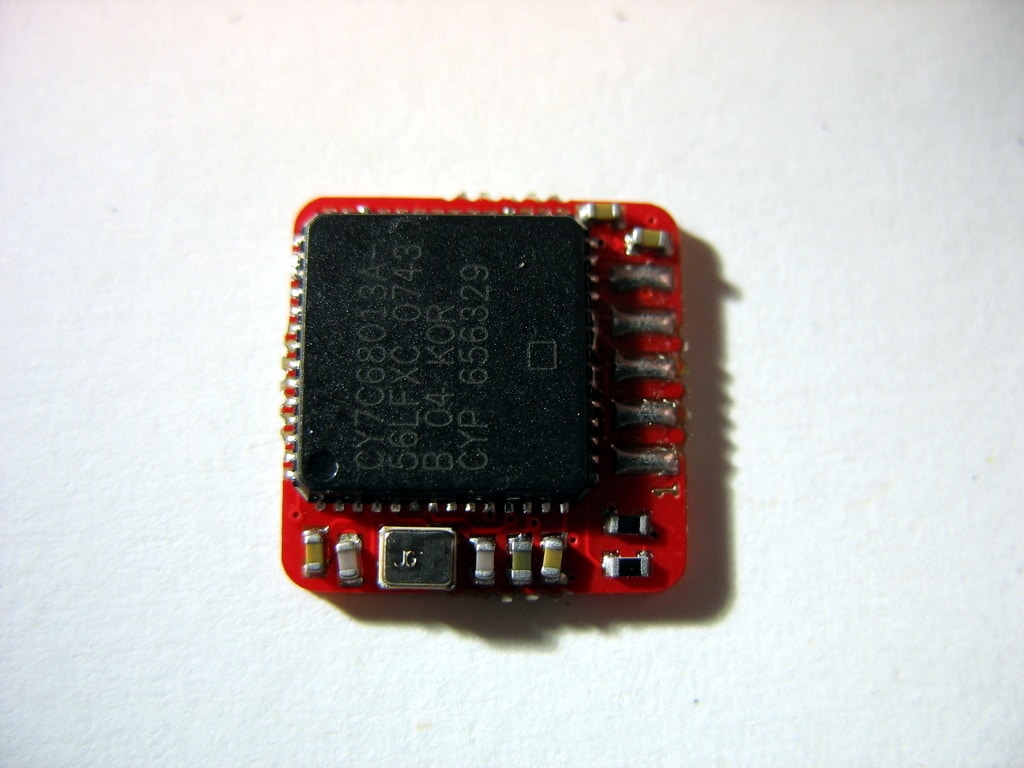
never any issues, reliable, solid behaviour, all over excellent.
stephen
fast cpu speeds and decent amount of on chip memory
a google search turned these up
https://www.fussylogic.co.uk/blog/?p=1226
https://www.youtube.com/watch?v=uD3_PqbAgV0
and not least f407ve has superfast fp32 math 
viewtopic.php?f=3&t=76&start=160

