
Designing them
I use KiCad to design my pcb’s. I chose it since it’s free, and as i started fairly recently, it was already at a point where it seems good enough.
for me:
pros:
-free
-the UI is ok (not perfect, but good enough)
-easy to find tutorials/help
-easy to make your own footprints
cons:
-still has a few too many stability issues
-still needs some maturing, like the new OpenGl canvas that is lacking some features and then you have to switch to another older canvas to do certain actions
Having them built
Atm i use dirtypcb’s.
my experience with them so far is good.
pros:
-they allow free panelization for 2 layer boards
-they go down to 6/6mil spacing/track width (also slightly smaller vias compared to other cheap board houses)
-even if you don’t exactly respect their requirements, if you don’t exaggerate they’ll still make it. No pingpong because 1 trace is a bit too small, or a silkscreen line is a bit to thin or… (i hear that with some boardhouses it’s not easy if you’re a beginner)
-all colors cost the same
cons:
-a bit more expensive than the real cheap ones
Soldering them
having QFN components on my boards, this is also a challenge
Solder paste
Yesterday i received a batch of Loctite GC10 solder paste, and my first test seemed *very* encouraging  . First attempt at 2 qfns seemed to go very well. I have yet to do an optical inspection of it (made myself a solder cam so i can see the small details), and check for shorts, but at least everything is connected and i can program the stm32 (i ran a small test program that just toggles all connected pins).
stencils
stencils are becoming cheaper, but when i discovered i could buy a 150€ silhouette portrait cutter, and cut my own stencils on overheadprojector slides, i didn’t hesistate . Very glad i bought it, i can now quickly make my own smd stencils whenever i need them (like for experimenting with the solder paste i’m currently making stencils with just the qfn parts as that is what i’m most focused on now, all the other things are easy to solder).
More info about it can be found here: http://dangerousprototypes.com/forum/vi … =68&t=5341
there is a gerber2graphtec python tool you need (it makes the cutter work more precise). and it’s giving me great results even on the qfn pads with 0.5mm pitch.
the actual soldering
i’ve got an aoyue hot air smd reworking station that i’m very pleased with. But i’m now also using the skillet method (just putting the pcb in a skillet on the fire in the kitchen, works remarkably well and as cheap as can be XD. using an old skillet i hadn’t thrown away yet, and pleased with the result).
i’m considering building an own oven, but as the solder paste is leadfree, finding a toaster oven that can go warm enough may be hard :s.
Seeing as i’m going for small pcb’s, this actually seems like a great idea: http://hackaday.com/2017/07/13/a-bright … soldering/
[racemaniac – Fri Jul 14, 2017 11:33 am] –
<…>
But i’m now also using the skillet method (just putting the pcb in a skillet on the fire in the kitchen, works remarkably well and as cheap as can be XD. using an old skillet i hadn’t thrown away yet, and pleased with the result).
I have read that using clean white sand in the bottom of the skillet provides better temperature control. No personal experience in that area but I swear by my hot-air rework station.
Ray
stephen
I usually use a cheap solderpaste syringe (no stencil), and often is a little “outdated” too…
I found that with a “soft” PCB preheating made with a common hairdryer for a couple of minutes before apply the solderpaste, it helps a lot the adhesion to the pads and the control of the right quantity.
you can also buy bags of syringes as well.
pots of paste are more economic as well.
remove the needle and a suitably sized rod can push the plunger back a fraction or fully out with only gentle tension else it pops out of the head. the head can flip and then its a fishing exercise.
try adding flux, couple of drops at a time to loosen the mixture, mixing is fun.
much easier if plunger is ejected or it’s a pot.
my spare pots are wrapped in multiple layers of cling film and in the freezer.
stephen
Does anyone has link to a good cheap solder paste syringe for a few boards?
And has anyone successfully made a reflow oven out of a toaster oven?
I’m about to try the skillet method, but don’t want to “cook” the boards if there is some better way…
Bought a normal toaster oven, but found that it does not heat up fast enough.
Looking at how people manage to make a toaster oven work as a reflow oven, they need to do a lot of expensive modifications.
e.g. cover the interior with expensive gold , heat reflective tape, add an additional heater element
So I decided to buy one of those cheap Chinese made reflow oven ( I think its called a T962), but it was useless.
Heat control was terrible.
So, I reflashed the firmware with the open source version that someone wrote for that oven, which also allowed control via serial, and had support for multiple external temperature probe interfaces, and used the vent van to aggetate the air.
( fitted two new Maxim thermocouole interfaces to improve the temperature control)
But the internal temperatures still varied widely between the 2 probes, so it maxe a big differnce where you put the board e.g. hot spots and cold spots in the oven.
I saw that somone did a further modification to the oven to fit an internal fan blade, driven from a motor above / outside the midde of top of the oven, but I dont have a lathe or the other machines needed to make this assembly, so I gave up…
i did have one mad cap idea…
Why not use a hot air paint stripper to blow hot air into a toaster oven. They are quite cheap and put out air that should be hot enough, plus yiu can get ones with built in variable heat controls, and possibly ones where you can also vary the air speed.
This could potentially get around the problem with uneven heating and lack of heating power which all these ovens seem to have in common
I’ll do some search in google to see if someone has experimented with that.
the trick will be finding one without the cost increasing ‘brand’ name, aka go faster stripes 
stephen
The problem is most domestic ovens do not heat up fast enough. I know the oven in my kitchen seems to take around 10 mins to get to 220 deg, which is far to slow.
The oven needs to have the ability to get to almost the reflow temperature in a reasonable time frame, e.g. perhaps a min or two, but crucially it also need to be able to quickly ramp up to the melting temperature and then reduce the temperature after flow has occurred.
This one seemed to fit the bill quite well
https://www.bunnings.com.au/ozito-2000w … n_p6290265
Because its variable heat
But As I suspect both the motor and the element would need to have speed controls, its probably more economic for me to buy this on
https://www.bunnings.com.au/xu1-2000w-c … n_p6290580
Which is cheaper, and add the external controls.
4Kw dimmer controllers care cheap
http://www.ebay.com.au/itm/4000W-AC-220 … 1849472710
But they would need the triggering control e.g. a BluePill plus some optos
Not sure what to house the thing in.
A toaster oven is probably too big
i meant use the circulation fan out of one, not using a fan oven

srp
[zmemw16 – Thu Oct 19, 2017 10:16 pm] –
@roger
i meant use the circulation fan out of one, not using a fan oven
srp
OK
I tried to get hold of a cooker fan, but they were not easy to source.
I see Amazon in the US has them for $11 USD, but I can’t find a local supplier in Australia.
Take a look : http://andybrown.me.uk/2014/05/11/awreflow

srp
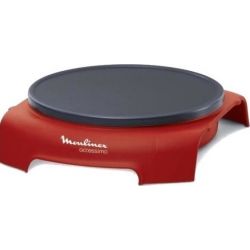
- MOULINEX.jpeg (5.22 KiB) Viewed 372 times
The solder went fine, but overheated in the center, because the skillet was not totally flat, and burnt the botton of the board.
Amazingly enough, all the copper contacts were still fine except for a small ground area, so I broke that off, applied a bit of nail polish to protect the solve, and completed the board.
If it doesn’t work, I have another 9 more to fine tune my skills 
Next try I need to 3d print a stencil because applying the solder by hand was a pin in the but. Also I used a lot of 0603 components, big mistake since I have enough space to have used 0805 for all of them, but well, that will go to rev 2 of the board.
Min layer size is probably going to be too thick e.g. .2 or .4mm
Edges are messy.
Positional accuracy is perhaps 0.5mm at best on my Mendlemax 1.5
Will have to test and see what happens…
Woud you say the T-962 is not worth it even with the open source firmware and cold junction modification?
I have been reading on modifying a toaster oven, and seems like a lot is needed to make it reliable. i.e. insulation, sealing, add a controller, add/replace heating elements… at the end of the day after all that is a lot of time and perhaps the same cost as a t-962 in ebay.
However, I never had any success with it, even when running the open source firmware.
The readings I got on the 2 temperature probes, were more than 20 deg C different from each other, so I bought new probes, however that didnt help
I bought 5 new probes, and tried them, but the results were the same, i.e I cant get an accurate temperature reading.
I put an additional probe on the tray, but it didnt help as that probe showed a differnt temperature to the other two ( which are in the top of the oven)
I tried to solder a few test boards, just with cheap components e.g resistors, but the resukts were very inconsistent. Often the solder had not melted.
I think the issue is that effectively this is not a hot air reflow oven, its the 2 radiant heat elements in the top of the oven, which heat by radiation as much as by convection.
Perhaps some people made these work, but I have yet to see a youtube video of someone showing consistent results, except of they made a lot of modifications e.g. fitting a convection fan
. i cut stencils from overhead slides, and it has no problem going down to 0.4mm pitch pins, and creates great stencils .the machine only costed 150€ new, and i use it with a free python script that converts a gerber to instructions for the printer
.Reflowed 1 board in a skillet. Difficult to keep the heat the same in all parts. Eventually the center of the skillet went up with the thermal expansion, and burnt the center to the board. All the tracks were still fine, and the board is usable. Using sand as recommended by Ray would likely help.
I applied the solder paste manually, quite a lot of time for 0603 components, but doable.
Next I bought this oven from amazon:
https://www.amazon.com/BLACK-DECKER-TO1 … ction+oven
It’s mentioned in several write ups on converting a toaster to a reflow. It’s a convection one, with FAN, and 4 heating elements.
Unmodified it works fine for low temp paste (SN PB BI). Much easier than the skillet, solder started to melt about the same time everywhere in the board (10×10 cm board). Heats up fairly quick to 150C, so I actually heated up in phases with the oven controls, and turned it off after the solder paste melted, waited a few seconds and opened the door.
This time I used a stencil I printed several with the 3d printer at 0.2mm layer thickness. Not optimal but works. I am waiting on a laser module to add to the printer for cutting mylar or something similar, then will use that for stencils.
Next, build a reflow controller with a bluepill, a screen and a thermocouple. I have the components but haven’t had time to work on it yet.
I plan to use this code, but modified to use the normal Adafruit GFX library, and the stm32 (some timer differences):
https://github.com/dasaki/nanoReflowController
I may eventually modify it to read and save the profiles from an SDcard, or use a touch screen, currently that uses a rotary encoder, and saves to eeprom (which I’m having to adapt to use the stm23 flash instead. Doesn’t use much memory, so a bluepill should have enough flash and ram to fit it and leave a couple KB for eeprom emulation.
I think I’ll have to dust off my T962 reflow oven and try to fit a fan.
https://www.ebay.com/itm/T-962-Infrared … 3160938072
Because without a fan its really had to get decent temperature readings. even with 3 probes  as I think there are significant hot spots caused by the 2 heating elements which are positioned only an inch or two above the PCB.
I’ve baulked at doing major surgery on the oven thus far, but I think the T962 is pretty useless without doing some serious changes
The only problem is the construction of the fan as I can’t simply make one out of tin plate and solder it together as the solder would melt.
I think I’ll probably need to buy some steel bar and cut a thread into the end, then make an aluminium fan wheel and bolt it on the end.
Not sure how I go about making a bearing that will withstand 250 deg, because the fan drive shaft needs to go in through the top of the oven.
Probably some sort of plain bearing is required, or I could get a ball race bearing and run it dry after first somehow getting the grease out.
Any suggestions would be welcomed … Perhaps we should start a new thread on reflow ovens …
So far I have only reflowed low temp solder, but I have repeated many cycles for lead free solder and the oven has no problem getting to the peak temp. A bit slower than I would like, but not too bad, and I still need to finish adding insulation. It’s fun to reflow PCB in a toaster oven
My wife totally thought it was for the kitchen when it arrived from amazon… And given that there are only < 50 parts to solder even hand soldering is possible, even if result would not be as pretty. I wonder if it is not as fast as putting solder paste with a serringue and put it into the oven for a single proto!
I have all parts and an early PCBs on their way, some parts I am already receiving, so I should be able to do the assembly before XMas hopefully.
And for a full panel using a stencil to apply solder paste to the whole panel should cut the time too.
If the BOM is not going to change any more, I’ll have a look a order anything I don’t have yet (MCUs, usb connector, and SY6280 come to my mind…) do you have links to the parts you ordered?
i was pleasantly surprised how well it works with small boards
i’m glad i chose to invest in a stencil cutter first so i can quickly apply the solder paste, and even properly solder qfn stm32’s, and buying/building an oven is also on my list, but soldering in an old skillet is just working so well that i currently have little motivation to look for something else XD
[racemaniac – Fri Dec 01, 2017 7:11 am] –
currently i’m also soldering in a skillet
i was pleasantly surprised how well it works with small boards
i’m glad i chose to invest in a stencil cutter first so i can quickly apply the solder paste, and even properly solder qfn stm32’s, and buying/building an oven is also on my list, but soldering in an old skillet is just working so well that i currently have little motivation to look for something else XD
What do you mean by “stencil cutter”?
I am also looking for a cheap way to do pick&place…
https://blog.ohmnilabs.com/diy-vacuum-p … -and-place
Haven’t tried to make one yet, but is on my list.
[Squonk42 – Fri Dec 01, 2017 2:43 pm] –[racemaniac – Fri Dec 01, 2017 7:11 am] –
currently i’m also soldering in a skillet
i was pleasantly surprised how well it works with small boards
i’m glad i chose to invest in a stencil cutter first so i can quickly apply the solder paste, and even properly solder qfn stm32’s, and buying/building an oven is also on my list, but soldering in an old skillet is just working so well that i currently have little motivation to look for something else XDWhat do you mean by “stencil cutter”?
I am also looking for a cheap way to do pick&place…
Stencil cutter: something to create your own solder paste stencils (based on the paste layer gerbers).
I learned about it here: http://dangerousprototypes.com/forum/vi … =68&t=5341
basically: you buy a silhouette cutting machine (you can probably easily find second hand models, but i bought a new one, A4 size, for 150€)
and someone made a pythonscript to convert gerbers in really precise cutting instructions for that machine. giving you great results from it, directly from gerber files (see the linked forum topic, it’s mentioned there in the first page).
as many people recommend, you just buy a bunch of overheadslides (good material, perfect thickness), and then you can start cutting your own dirt cheap solder paste stencils, that work really well for me .
seeing what a solder paste stencil usually costs, even the cheap ones from china, a 150€ investment and then having cheap custom stencils for whatever i can want (when first working with the QFN chips, i made stencils for only them so i could learn how to work with them properly).
it’s maybe not as good as a metal stencil, but for my current needs, i’m *very* happy with this setup . and btw also invest in high quality solder paste if you want to solder the more difficult ic’s .
some pretty strong magnets about these days, less than a 1:1 pickup ratio, i.e. 1:3, 1:4 ratio doesn’t really matter as long it moves the air inside.
of course i’m hoping the mounting panel is not steel
stephen
Won’t the heat degamnetize ? yes it seems so
do i need a magnet inside ? i’m thinking of labs with liquid in flasks being stirred by an external rotating magnet. would (a) steel blade(s) follow an external one ?
Also, it would still need a bearing. Why, if you mean one with balls, races etc ?
loads are almost zero, steel on brass or copper shouldn’t be a problem running dry.
it doesn’t really need a high speed to move some air around.
if required high temperature greases do exist.
anyway, pop rivets, find a large one with tension rod of about the size of rod you have, nip it up until it just locks in the panel, might be better to add some washers – you only want to tighten until just begins to bulge, way, way before the snap point and before it fully balloons the end.(tends to bend and shrink the hole.)
release the gun. push the rod back and out.
find a suitable rod and assemble … …
stephen
I had a go at cutting a stencil again on my laser cutter, and the results were not that good.
As in the video that victor posted, I used the “scan” setting which rasterises the image into scan lines and sweeps the laser head back and forth across the target area.
I’m not sure if its the material I’m using, but both the white mylar sheet and also a transparent projector side, both get quite a lot of melting around the outside edges of each pad.
Looking at the vidoes on YouTube the silhouette cutters seem to give a better result as they don’t melt the plastic and give rough edges around the pads.
Having to play around with the power levels is normal for any new material I put in the cutter.
I have a parameter library for things I normally cut or engrave, like different thicknesses of plywood, but for new things I have guess a power and speed and run a small test cut ( or scan ) and take a look at the results.
For my Mylar sheet, which is a sort of almost opaque white colour, the machine is probably a bit too powerful, as there is a minimum percentage power at which the CO2 laser will strike.
On my machine this is around 10% of maximum power.
The guy at LowPowerLabs has a much more expensive machine than I do. Most cheap machines do not have a setting where you enter the power in Watts, they just have a setting for percentage , which is just a control on the PWM duty cycle that the controller feeds to the Laser HT PSU.
And for most people, max power is they can run the laser is not the 100% setting in the control software, because the HT PSU can deliver more power than the tube can handle , by about a factor of 50%.
So most people have a settings range of between around 10% and 60% in the control software which relates to 0 to 100% power
I have gone to the trouble of putting an insulated screwdriver onto the trim pot in the laser PSU and adjusted it, so that 100% from my controller PWM is 100% sustained power on the laser.
So I get a better dynamic range in my control software.
Nevertheless, it’s still very hard to get the settings right, especially for things which only need a small amount of power, because the power curve on the laser is non linear with respect to drive current
I think you said you have a small LED laser for your 3D printer . If so, I think you could probably cut the white Mylar sheet, as it takes very little power.
However the transparent sheet used in the video seems to take loads of power, as I am using 30%
[RogerClark – Sun Dec 03, 2017 8:56 pm] –
I think you said you have a small LED laser for your 3D printer . If so, I think you could probably cut the white Mylar sheet, as it takes very little power.
However the transparent sheet used in the video seems to take loads of power, as I am using 30%
Mine is a 3.5W laser, and seems to turn on with really light duty cycles, so I have a good chance of modulating it just good enough. At 20-30% it can burn wood and leather. As soon as I get a chance at cutting a stencil, I’ll post an update.
If anyone comes across the web page (or video etc ) where someone describes how they fitted an internal fan in the T-962 oven, could you let me know.
Searched the web a few times over the last couple of days and can’t find that specific modification.
I can only find the firmware and electronics modifications, but not the modification where some makes a small fan and drills a hole in the top of the T-962’s oven chamber for the drive spindle to go in from the top.
![[Pending Enhancement] RTC values resetting](https://sparklogic.ru/wp-content/uploads/2019/11/nucleo-l476rg-zestaw-startowy-z-mikrokontrolerem-z-rodziny-stm32-stm32l476-90x90.jpg)
