
My favourite pair however usually sits on my head, and from there takes the occasional tumble on to whatever hard surface it finds to launch itself at.
Eventually the cumulative effect of all of these impacts causes the lenses to break free of the frame, (or to be more exact, the frame to break free of the lenses) and yet another pair has to be consigned to the bin. Like shoes, they always wear out just as they are getting comfortable.
The latest casualty was a pair of Liddell’s finest (or was it Aldi…), which head-butted the bathroom floor tiles and “sproinged” apart in the usual manner.
However instead of launching them into the recycling bin with a few choice words, like a “normal” person, I did what us few remaining optimists do and gave them a quick once over to see if there was even the remotest chance of fixing them.
Normally the frames are made from some specialist alien material that is designed to resist any attempt to glue, tape, rivet, weld or otherwise bond them back in to their former shape, but in this case I discovered they appeared to be made of some form of brass or bronze, so I set about soldering them.
To my surprise it worked. I attacked the problem as if they were some sort of SMD component, cleaned all of the surfaces of any lacquers and greasy thumb prints, applied a little flux, carefully positioned the failed parts in the correct orientation, held them with blue tack and applied the heat from my ancient battleship grade Maplin soldering iron to the joint with some lead free solder.
I was going to use the leaded stuff, but I figured it might be softer and more prone to fail.
The result has lasted a week, thus putting it streets ahead of all of my other attempts to fix broken glasses frames (by about six and a half days). I can confirm that epoxy is too weak, so you either need to use half a ton of it, or it will fail instantly, superglue (cynoacrylate) is not man enough for the task either, and also frosts lenses with its out-gassing. Elastoplast works in an emergency, but does get you some strange looks. Duck tape is good for almost every other job in the known universe, but not this.

I even found an almost perfect matching permanent marker to touch up the blueing, so it now actually looks better even than the photo above.
Now I know I can get a replacement pair from the pound shop, or even a marginally better pair from the supermarket, and that the cost of my time taken to repair them far outweighs their monetary value, but that is not the point.
spot the leading edge of a seagull at rediculous distance
reading the screen / /kindle however slowly when from 1.5 to 3.0 reading glasses
btw kindle unlimited – massive, massive recommendition, i’m gettting more than they must have expected
wondering about lens replacement 
maybe if i find a way to finance it
srp
https://www.ebay.com/sch/i.html?_nkw=us … =0&_sop=15
https://www.ebay.com/itm/1000X8-LED-USB … 3247065750
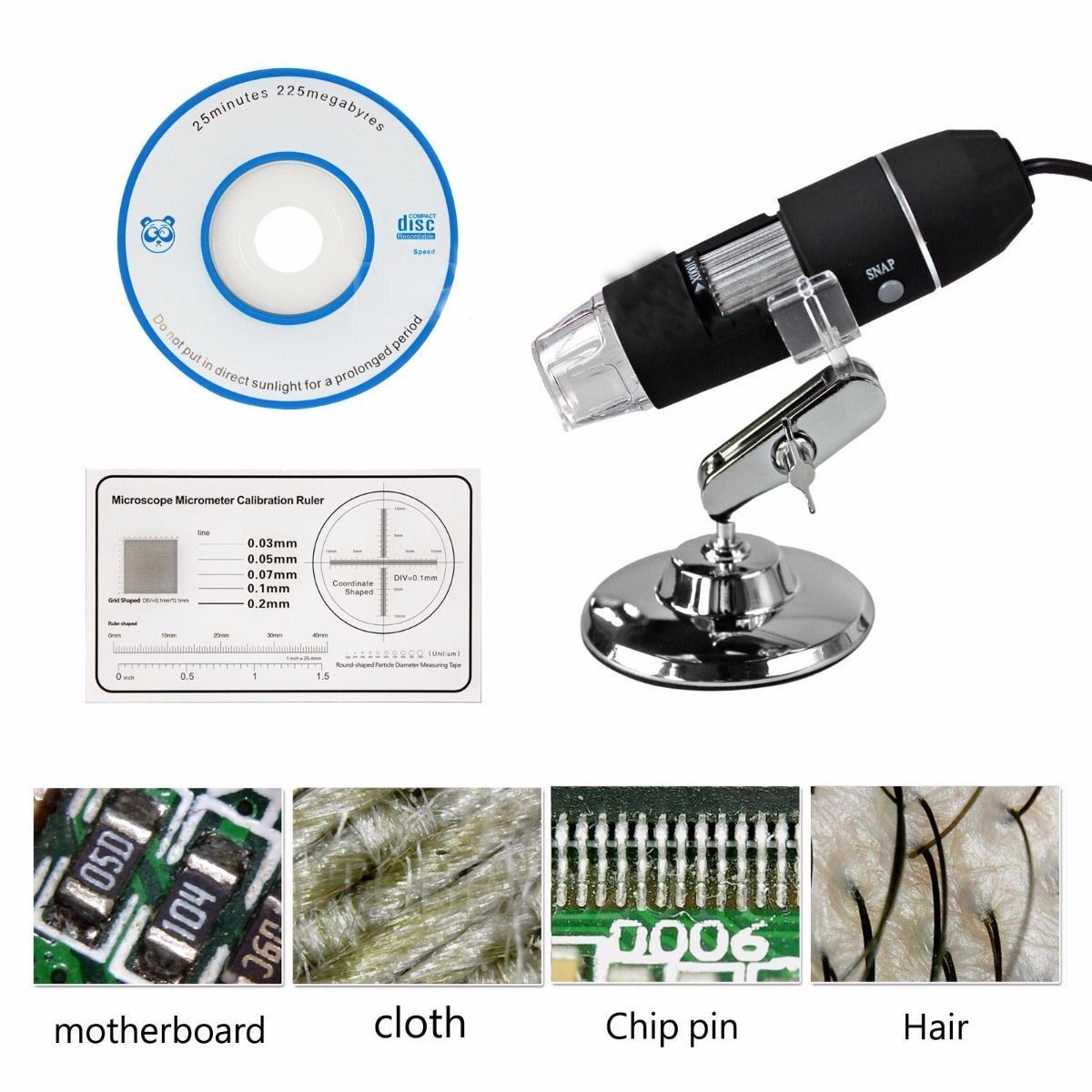
i took a gamble and it works in linux, but no guarantees

https://blog.adafruit.com/2012/06/28/ad … -linux-yes
yup useful
we could literally ‘make it yourself’ but i find it a hassle and just got the end product


Do not spend too much money for it, all microscope’s optics (in this category) are the same..
The keywords are: 500x, 8 LEDs, <$11 (shipping incl.) and I got this one (the mechanical construction is toy-like quality, of course, but it works fine):
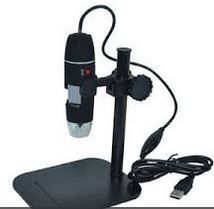
- usb microscope.JPG (14.14 KiB) Viewed 374 times
[ahull – Sun Jul 08, 2018 11:57 pm] –
Interesting, I may take the plunge. I note that the Adafruit version is $79.00 and the lowest ebay price is about $10.66 for what appears to be an identical gadget.
I have one of these, the cheap one. It is 640×480 if I remember well….
The Adafruit one
https://www.adafruit.com/product/636
At the top it says
here’s a 5.0 megapixel sensor inside
but on Technical Details
Image Sensor: 2.0 megapixel w/high-speed DSP for 5MP interpolation
so it should be 1600×1200
the 1000x is lens magic (but i think pito is right about that 20-50x, 1000x is probably simply software not real resolution)
of course one of those ideas is to make one with an ov2640 2mp or ov5640 5mp and an stm32
the difficult part as it stands is that lens assembly (v difficult to diy) and how to fit that with the diy contraption
for the undeterred there are lenses which you could clip on to your mobile phone (which these days comes with stratospheric megapixels sensors)
https://www.ebay.com/sch/i.html?_nkw=mi … =0&_sop=15
hence 1 could use the clip lenses on the mobile phone or a diy OVnnnn contraption with stm32
There is a knob in the cable for the LED illumination dimming.
I also checked a photo: it is not 0.3Mp (640×480) but 0.2 (466×336) 
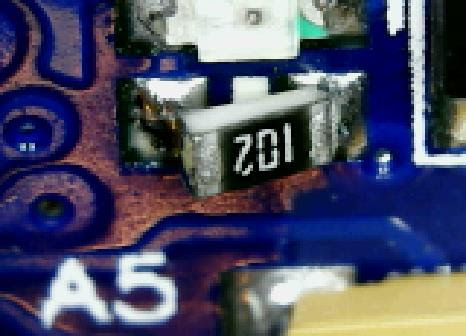
- 20160611_122924.jpg (47.01 KiB) Viewed 286 times
[zoomx – Tue Jul 10, 2018 9:13 am] –
With the chinese and maybe Adafruit model you can only focus with the knob in the middle. There is not any lens magnification.
There is a knob in the cable for the LED illumination dimming.
I have the 640×480 Chinese eBay version and as “zoomx” notes there’s just a focus knob. One can, however, adjust the distance between the microscope and the board which effectively changes the field of view, hence the magnification. I’ve found the later, thicker, volumes in the Harry Potter series useful in this regard. The stand in “Pito’s”, toy-like that it might be, would be a better choice and I’ve got to get around to building something like that. Typically I’d prefer much less magnification than the provided stand allows.
To use this as an endoscope would sure make your eyes water if someone tried to shove it where the sun don’t shine or choke you from the other end.
e.g.
https://www.ebay.com/itm/5X-Illuminated … 2935569928
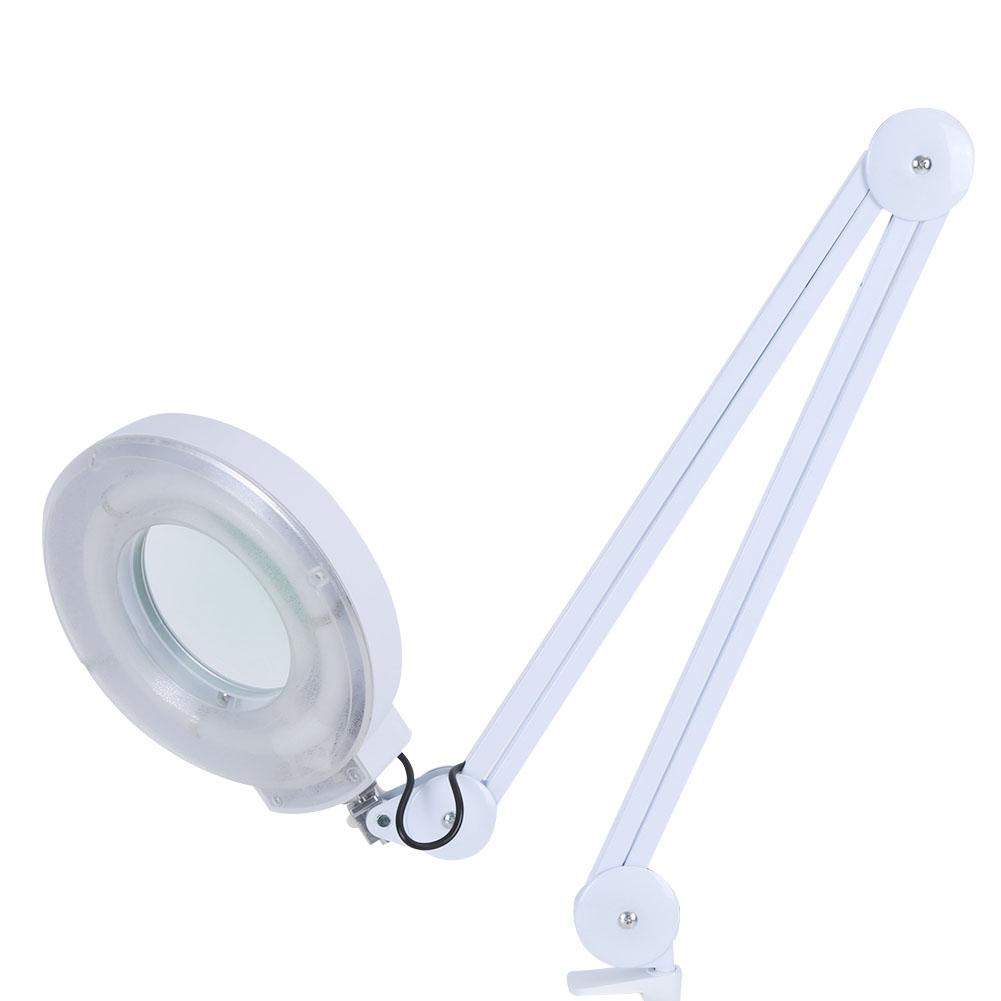
the key is the size (large) and (necessarily high) quality lens and bright lights, for those superfine smd details high lumens helps (a lot)
it turns out there are lots of ‘me too’ devices on ebay e.g. e.g. magnifying glass with leds, which i’d think may not provide the better set of lens and bright lights, but those that are adequate they tend to be sold for a premium (expensive) on ebay etc, i’m not sure where’d one get ‘cheap and good’ ones
[Riva – Tue Jul 10, 2018 4:08 pm] –
You gotta love the way the posters put all keywords in the title, even if they are not really suitable.
To use this as an endoscope would sure make your eyes water if someone tried to shove it where the sun don’t shine or choke you from the other end.
Not sure why that remark brought this to mind…

On a slightly more serious note, I picked up a similar magnifying lamp in Maplins swan song sale. Its very good, even though it uses a CFL rather than LEDs. No doubt if/when the CFL goes I’ll replace the tube with some LEDS.
[ag123 – Tue Jul 10, 2018 5:26 am] –
oh i did a little research on ebay & aliexpress and found that most of these ‘cheap’ usb microscopes has a mere 640×480 image sensor the 1000x is lens magic (but i think pito is right about that 20-50x, 1000x is probably simply software not real resolution)..
They started with 100x years back, then 200x, then 500x, now 1000x, and in September this year they will advertise 2000x. With the same optics and image sensor.. There are no “lens” beyond 50x it is a digital zoom only for larger magnifications.. The optical zoom up to say 25-50x is done with the lens inside the body (with the silver wheel there) all others are just sw magics..
[Pito – Wed Jul 11, 2018 11:39 am] –
They started with 100x years back, then 200x, then 500x, now 1000x, and in September this year they will advertise 2000x. With the same optics and image sensor.. There are no “lens” beyond 50x it is a digital zoom only for larger magnifications.. The optical zoom up to say 25-50x is done with the lens inside the body (with the silver wheel there) all others are just sw magics..
thanks! that’s a nice teardown
that 2 lens optics is probably to focus the image on the sensor, i had forgotten most of my physics but the magnification probably has to do with the distance of the piece from the (objective) lens
http://www.quekett.org/resources/unders … ary-optics
as i imagined the lens assembly and (very much) the lens itself is ‘hard to make’ hence buying the product itself is probably still simplier.
but i’d imagine, it is quite possible to replace the sensor with a OVnnnn and we could replace the mcu with stm32 as well (which it may well be stm32, just a wild guess)
hence, this would be for those who really wanted to go the distance and make pretty ‘high end’ lens assembly telescope / microscope etc
https://www.ebay.co.uk/itm/Wernicle-Wac … SwCGVX672z
https://www.ebay.com/bhp/optical-machine?rmvSB=true
Be aware that most of those grinders simply shape the lens for the rims, so you would need one that actually cuts/polishes lenses.
Bulk spectacle lens blanks also turn up on ebay from time to time, and I imagine a trawl through Ali express etc will also yield some interesting results.
I wonder how easy it would be to fabricate a lens grinder using stepper motors, levers/cams to improve resolution and spinning polishing disks. It might be simpler to go to Spec Savers and ask for their discarded lenses.
http://www.quekett.org/resources/unders … ary-optics\
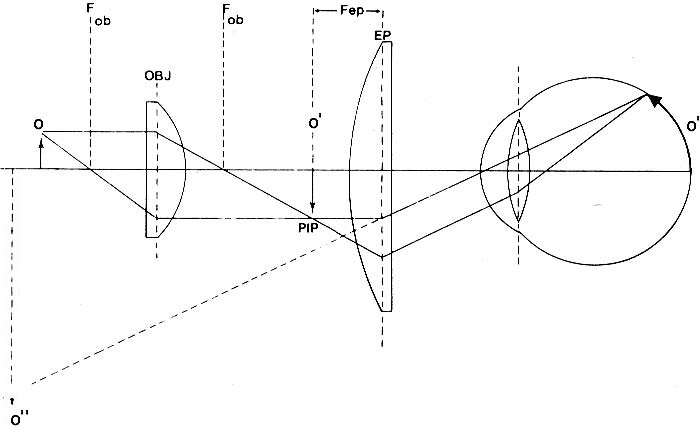
and noted that in figure 9 a compound microscope is made up of 2 convex (magnifying) lenses, turn that around it becomes a telescope
then to satisfy my curiosity i searched for ‘acrylic lens’ on ebay
https://www.ebay.com/sch/i.html?_from=R … =0&_sop=15
so i found a $0.75 magnifying glass and small flash light 18mm acrylic lens for $0.99 (if u bother to search aliexpress, it’s cheaper!)
while the optics may still be questionable, but otherwise what remains is to invent the contraption fit the lenses in say a cylinder (PVC water pipes?) with its focussing mechanism. then add OVnnnn + stm32 + usb wires & connectors, then there you have it a high powered (in terms of magnification) usb microscope & u can have 5 mega pixels image sensors if u so desire
as it turns out, someone has been there done that, but this one involves a 3d printer
http://www.instructables.com/id/How-to- … Telescope/


[Pito – Thu Jul 12, 2018 1:40 pm] –
There are $3-$25 “microscope” adapters for your smartphone available..
Those do look quite useful, but sometimes the ancient analog solution works better. Two pairs of 3x reading glasses allow more freedom of movement (no trailing wires), and get me most of the way to the limits of hand soldering. For anything smaller, I will use one of my ancient, but still fully functional microscopes.
Its not that I am a Luddite, its just that the prospect of jabbing my mobile phone with the dangerous end of the soldering iron, or splashing molten lead on to a screen which would no doubt respond instantly with a myriad of cracks in the digitizer, or cause it to enter terminal sulking mode makes the analog solution more attractive.
The $11 usb microscope is nice to have when inspecting pcbs and making shots.
Not good for soldering job, as the distance to the object under inspection is 1-3cm and the bottom m’scope cover is made of plastic. If the cover removed the flux fumes would destroy the optics soon..
sometimes for the fine prints on ICs that’s hard to read i simply take a photo at close range and then digital zoom for a closer look, that works as well

